Ready to put this into action?
Get the complete Frontier Wisdom Collection — History, legends, and timeless wisdom from the American frontier — resilience, grit, and self-reliance.
Deadwood's Gold Rush Built a Town That Had to Survive Its Own Boom
How did Deadwood change after the gold rush that created it?
Recommended Resource
Frontier Wisdom Collection
History, legends, and timeless wisdom from the American frontier — resilience, grit, and self-reliance.
Deadwood's Gold Rush Built a Town That Had to Survive Its Own Boom
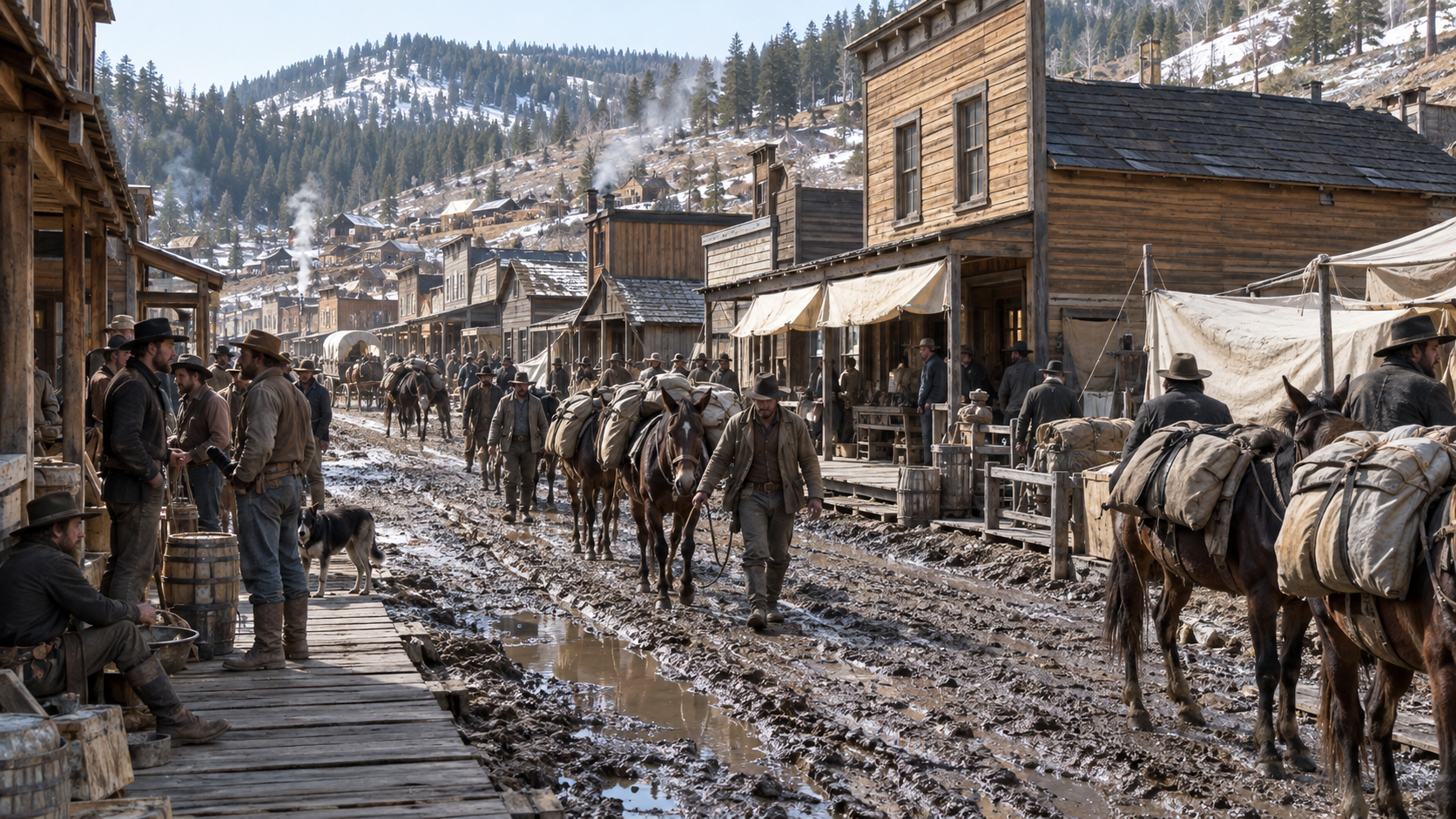
Source-led question: How did Deadwood change after the gold rush that created it?
Deadwood is often frozen in the moment of a gold rush: muddy streets, miners, gambling, and a town appearing almost overnight. The historic district tells a longer story. Deadwood was created by the Black Hills gold rush in eighteen seventy-five, but it had to survive the end of the first boom. Fire, flood, new transportation, changing mining, and preservation all shaped what visitors see today. The gold rush followed reports from the 1874 government expedition into the Black Hills. Miners arrived even though the region had been included in the Lakota reservation established by the eighteen sixty-eight treaty. That conflict is part of the town's beginning. A boom story that starts with prospectors and ends with storefronts leaves out the political and human cost of the rush. A mining camp grows quickly because money moves quickly. Stores, boarding houses, saloons, stables, and officesStores, boarding houses, saloons, stables, and offices followed the money, then had to adapt when the first easy gold was gone.
What the record supports
- Documented: Deadwood grew as a boom town during the Black Hills gold rush beginning in 1875.
- Documented: Gold seekers entered the Black Hills after the 1868 treaty had established a Lakota reservation there.
- Documented: A major fire in 1879 changed the surviving building stock.
- Documented: A flood in 1883 and the panic of 1893 also affected the district.
- Inference: Deadwood developed from a mining camp into a more urban commercial center.
The episode uses clearly labeled synthetic reconstruction imagery for explanation. Those images are not archival photographs and do not establish that an uncertain detail was witnessed.
The source trail keeps documented facts separate from inference. The episode follows the strongest available records and leaves unresolved parts visible; a missing record is not evidence for a precise route, invented dialogue, recovered object, or modern valuation.
Continue the series
- Western Stories index
- Old West hub
- Continue with the next source trail
- Subscribe to Old West source trails
Sources
- Deadwood Historic District National Register description — Deadwood was a boom town created in 1875 during the Black Hills gold rush.
- Gold Rush Era Settlement — Rumors of gold in the Black Hills were confirmed by the 1874 expedition, and miners arrived soon afterward.
- Discovery Hour: Black Hills history — Deadwood history includes Lakota, gold rush, mining, and the town's later development.
Media note: This page uses an authorized synthetic reconstruction image. The historical claims remain tied to the source links above.
Get the Old West Dispatch
Weekly insights on old west — delivered to your inbox. No spam, unsubscribe any time.
Want to choose specific topics? Customize your interests
Get the Old West Dispatch
Weekly insights on old west — delivered to your inbox. No spam, unsubscribe any time.
Want to choose specific topics? Customize your interests