Photos Are Part of the Description
Please review all photos carefully. For used, vintage, collectible, and one-of-a-kind items, the images help show condition, wear, markings, and included details.
Buyer Confidence
Buy With Confidence from SalarsNet
- •Actual item photos are included so you can inspect details before buying.
- •Condition notes are written carefully based on visible wear and available information.
- •Used, vintage, and collectible items may show normal age-related wear.
- •Questions are welcome before purchase.
Human Help
Want Me to Check Something First?
Need another photo, measurement, closeup, copyright page check, or other detail confirmed before you order? Contact me before purchase and I will do my best to help.
Condition Guide
How I Describe Condition
Used and vintage items are described based on visible wear, photos, age, markings, and available details. See the Condition Guide for the terms I use.
Authenticity Policy
What I Do and Don’t Claim
I avoid unsupported claims about authenticity, grading, rarity, provenance, or investment value. If a detail is uncertain, I say so plainly.
Questions before purchase are welcome. Seller contact, shipping details, and return terms are published before checkout.
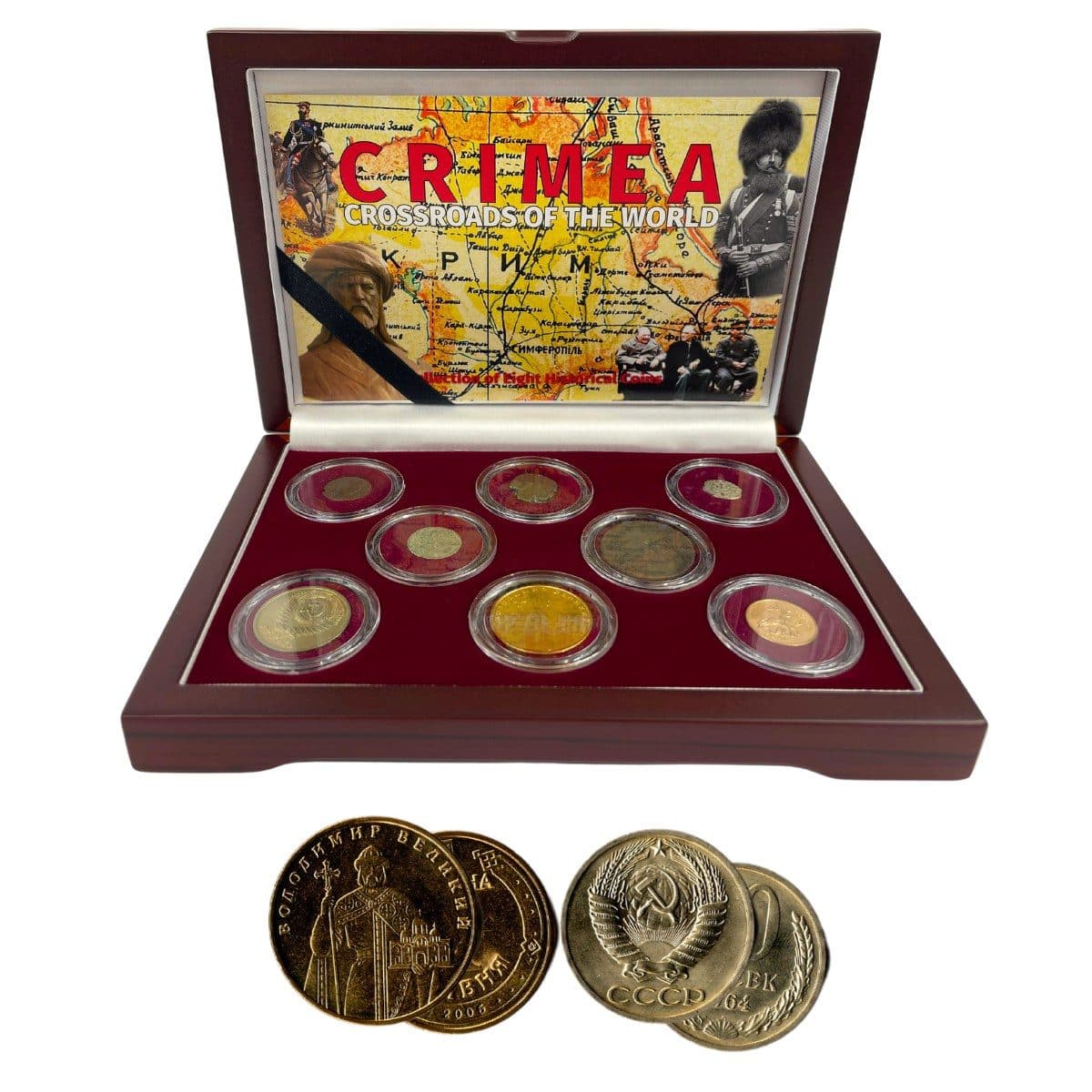
Crimea: A History in 8 Coins (boxed collection)
Description
When Batu Khan, founder of the Golden Horde, drove the Kyivan Rus’ off the Tauric peninsula in 1238, he established a provincial capital there called Qirim. The Genoese, who in the 13th century maintained Black Sea settlements in modern-day Kerch and Feodosia, pronounced that Turkic word with an Italian accent: Crimea.-At the siege of Kaffa a century later, those two powers fought for control of the peninsula. When plague decimated their ranks, the Mongols got creative, catapulting pathogenic corpses over the city walls. It was like a scene from a High Middle Ages horror movie. Terrified Genoese sailors high-tailed it out of there. And that’s how the Black Death spread from the Siberian steppes to Western Europe.-By 1347—a century before the Crimean Khanate was established—Crimea had already been controlled by the Persians, the Scythians, the Greeks, the Romans, the Byzantines, the Trebizond Empire, the Venetians, and the aforementioned Kievan Rus’—ancestors of today’s Ukrainians—and would in turn fall to the Ottomans, the Russians, the Soviets, the Nazis, and the Soviets again, before reverting to Ukraine in 1954. The British and French also had designs on the peninsula, home to the Crimean War of the mid-19th century that made Florence Nightingale famous. All of those peoples left an imprint on Crimea, adding to its rich and diverse cultural history. In the third decade of the 21st century, the war-torn peninsula is once again a battleground, as Ukraine seeks to repulse the Russian occupiers.--This remarkable collection is a history of Crimea in coins:--1/ Roman Empire, bronze, Constantius II, 4th century-2/ Byzantine bronze 12 nummi, Heraclius, 7th century-3/ Crimean Khanate, silver akce, 15th-16th century-4/ Ottoman Empire, Abdul Hamid I, billon para, 18th century-5/ Russia, copper denga, 18th century-6/ Soviet Union, copper-nickel-zinc, 50 kopek, 1960s-70s-7/ Ukrainian aluminum-bronze hryvnia, 2004-2010-8/ Russia, tombac-plated steel 10 kopek, 2010s
Packaging: wood box.
Images are representative of the type and general grade. The date, mint, color, toning, and exact coins received may vary unless the listing explicitly says the actual lot is shown.