Photos Are Part of the Description
Please review all photos carefully. For used, vintage, collectible, and one-of-a-kind items, the images help show condition, wear, markings, and included details.
Buyer Confidence
Buy With Confidence from SalarsNet
- •Actual item photos are included so you can inspect details before buying.
- •Condition notes are written carefully based on visible wear and available information.
- •Used, vintage, and collectible items may show normal age-related wear.
- •Questions are welcome before purchase.
Human Help
Want Me to Check Something First?
Need another photo, measurement, closeup, copyright page check, or other detail confirmed before you order? Contact me before purchase and I will do my best to help.
Condition Guide
How I Describe Condition
Used and vintage items are described based on visible wear, photos, age, markings, and available details. See the Condition Guide for the terms I use.
Authenticity Policy
What I Do and Don’t Claim
I avoid unsupported claims about authenticity, grading, rarity, provenance, or investment value. If a detail is uncertain, I say so plainly.
Questions before purchase are welcome. Seller contact, shipping details, and return terms are published before checkout.
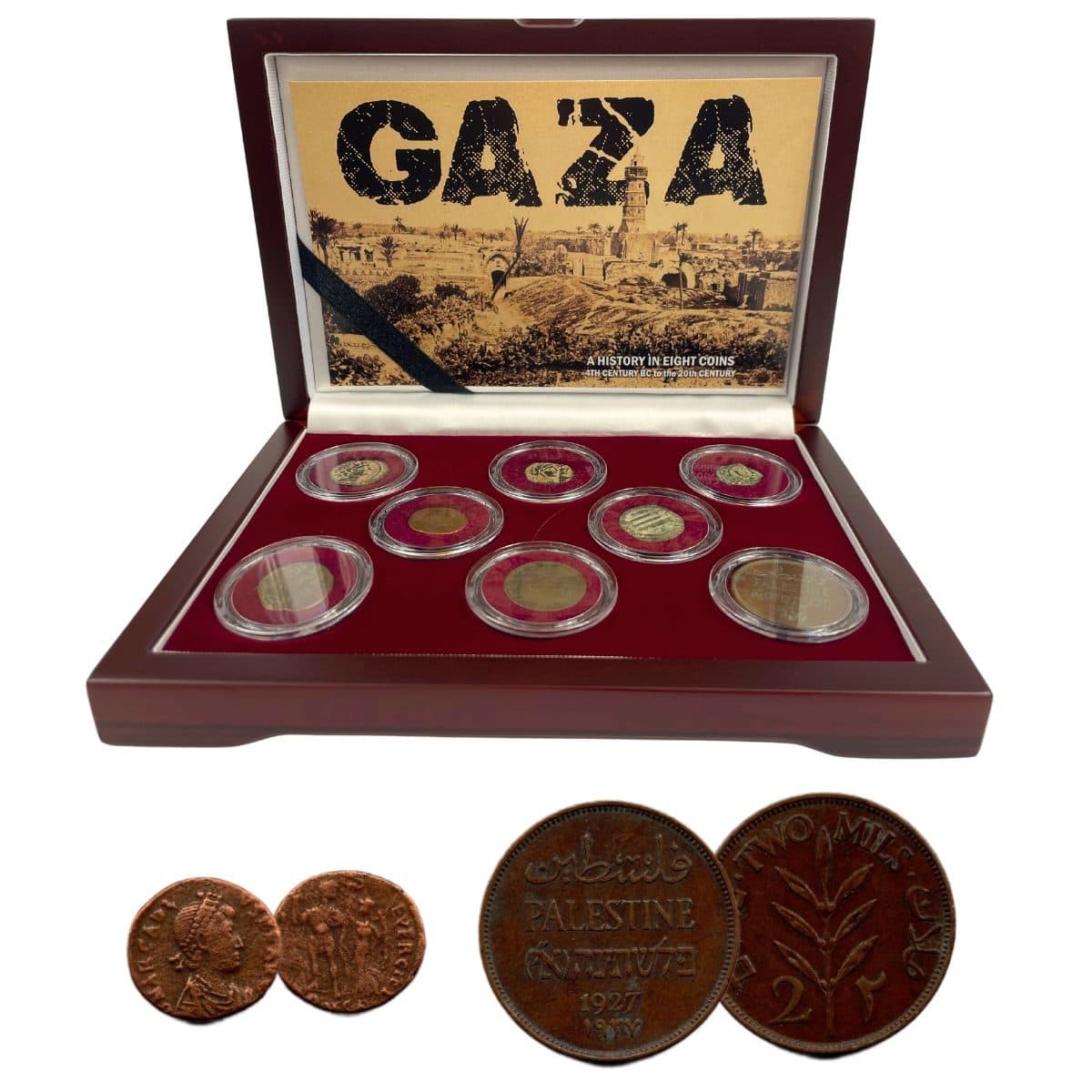
Gaza: A History in Eight Coins
Description
It is a place of great beauty, and even greater historical significance. It has been fought over for millennia. Over the centuries, it has changed hands numerous times: the Greeks, Romans, Jews, Nabateans, Arabs, Crusaders, Ayyubids, Mamluks, and Ottomans all laid claim to this 140-square-mile strip of land on the Eastern Mediterranean coast, before it fell under British control as part of Mandatory Palestine after the First World War. This is Gaza.--These eight ancient and historical coins trace the history of Gaza from the 4th century BC to the mid-20th century:--1/ Seleucid Kingdom, bronze unit-After its initial conquest by Alexander the Great in 332 BC, Gaza fell to his heirs, the Seleucid kings. The Hellenistic period lasted for almost 300 years.--2/ Aretas IV, Nabatea, bronze unit-From the first century BC, Gaza became the port city of the Nabateans. Their king, Aretas IV, surrendered the besieged city to the Jewish king John Hyrcanus.--3/ Herod I, Judaea, bronze prutah-Gaza was granted to Herod the Great, a Roman client king and a key figure in the New Testament, by Caesar Augustus in 30 BC.--4/ Arcadius, Roman Empire, bronze follis-Rome held Gaza for centuries. Under Arcadius, a devout Christian, paganism was eradicated from the region around the turn of the fifth century.--5/ Abbasid Caliphate, bronze fals-The Arabs conquered Gaza in 634. The Cathedral of John the Baptist was converted into the Great Mosque of Gaza. In 750, the Abbasids assumed control from the Umayyads, establishing Gaza as a center of learning.--6/ Mamluk Dynasty, copper fals-In 1260, the Mongols under Hulagu Khan threw out the Arabs and razed Gaza City. Gaza was saved by the Mamluks, the Islamic ”slave kings“ of Egypt, in 1277.--7/ Mahmud II, Ottoman Empire, 20 para-In 1516, Gaza—by now a small town with an inactive port, ruined buildings and reduced trade—was incorporated into the Ottoman Empire, which rebuilt the city.--8/ Mandatory Palestine, 2 mils-At the end of the First World War, Great Britain acquired quasi-colonial authority under Gaza, which was part of the Mandate of Palestine. British rule ended in 1948.
Packaging: wood box.
Images are representative of the type and general grade. The date, mint, color, toning, and exact coins received may vary unless the listing explicitly says the actual lot is shown.