Photos Are Part of the Description
Please review all photos carefully. For used, vintage, collectible, and one-of-a-kind items, the images help show condition, wear, markings, and included details.
Buyer Confidence
Buy With Confidence from SalarsNet
- •Actual item photos are included so you can inspect details before buying.
- •Condition notes are written carefully based on visible wear and available information.
- •Used, vintage, and collectible items may show normal age-related wear.
- •Questions are welcome before purchase.
Human Help
Want Me to Check Something First?
Need another photo, measurement, closeup, copyright page check, or other detail confirmed before you order? Contact me before purchase and I will do my best to help.
Condition Guide
How I Describe Condition
Used and vintage items are described based on visible wear, photos, age, markings, and available details. See the Condition Guide for the terms I use.
Authenticity Policy
What I Do and Don’t Claim
I avoid unsupported claims about authenticity, grading, rarity, provenance, or investment value. If a detail is uncertain, I say so plainly.
Questions before purchase are welcome. Seller contact, shipping details, and return terms are published before checkout.
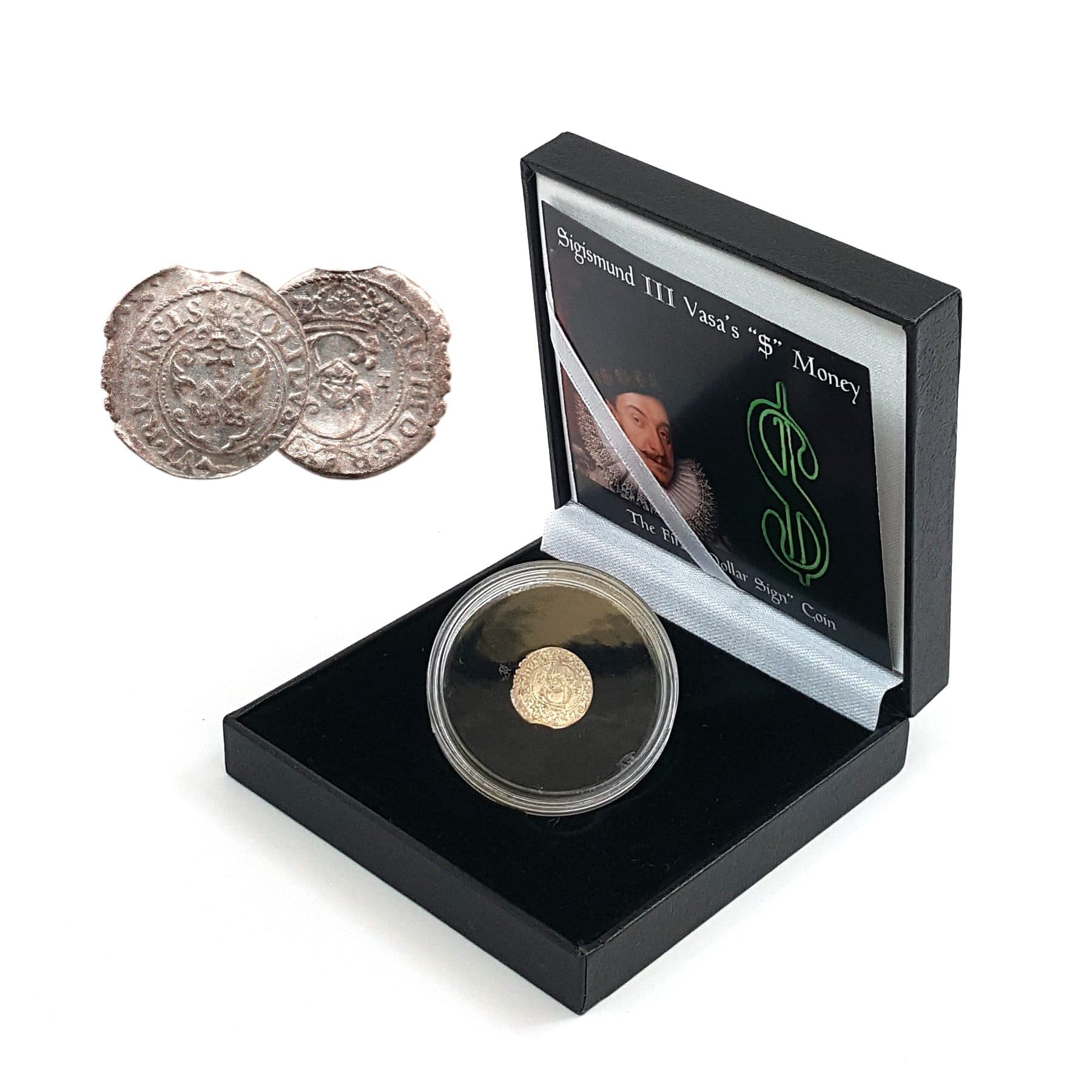
Sigismund III Vasa’s “$” Money: The “First Dollar Sign” Coin (budget box)
Description
No one can definitively say why ”$“ is used as an abbreviation for ”dollar.“ Neither Ayn Rand’s theory (that the symbol is a ”U“ with an ”S“ superimposed on it, with the bottom erased) nor the ”Pillars of Hercules“ theory (that the mark derives from engravings on the Spanish silver peso) accounts for use of the dollar sign in Europe as early as the 17th century. And why would ”S“ stand for ”dollar“? Some historians now theorize that the ”$“ has its origins in European money from 400 years ago. The silver coin struck by Sigismund III Vasa, king of the then-mighty Polish-Lithuanian Commonwealth from 1587-1632, has on its obverse a distinctive letter ”S“—the king’s initial. It is worth a fraction of a thaler, the unit of currency; in fact, the word ”dollar“ derives from ”thaler.“ Everyone, even illiterate common folk, would be able to draw the easily-recognizable ”S“ symbol on the coin—even if they could not write out the word ”thaler.“ Furthermore, the ”S“ money was in circulation for half a century, a period coinciding with the early colonial era. If this theory is correct, the ubiquitous silver 1/108 thaler of King Sigismund is the first ”dollar sign“ coin.
Packaging: budget box.
Images are representative of the type and general grade. The date, mint, color, toning, and exact coins received may vary unless the listing explicitly says the actual lot is shown.