Photos Are Part of the Description
Please review all photos carefully. For used, vintage, collectible, and one-of-a-kind items, the images help show condition, wear, markings, and included details.
Buyer Confidence
Buy With Confidence from SalarsNet
- •Actual item photos are included so you can inspect details before buying.
- •Condition notes are written carefully based on visible wear and available information.
- •Used, vintage, and collectible items may show normal age-related wear.
- •Questions are welcome before purchase.
Human Help
Want Me to Check Something First?
Need another photo, measurement, closeup, copyright page check, or other detail confirmed before you order? Contact me before purchase and I will do my best to help.
Condition Guide
How I Describe Condition
Used and vintage items are described based on visible wear, photos, age, markings, and available details. See the Condition Guide for the terms I use.
Authenticity Policy
What I Do and Don’t Claim
I avoid unsupported claims about authenticity, grading, rarity, provenance, or investment value. If a detail is uncertain, I say so plainly.
Questions before purchase are welcome. Seller contact, shipping details, and return terms are published before checkout.
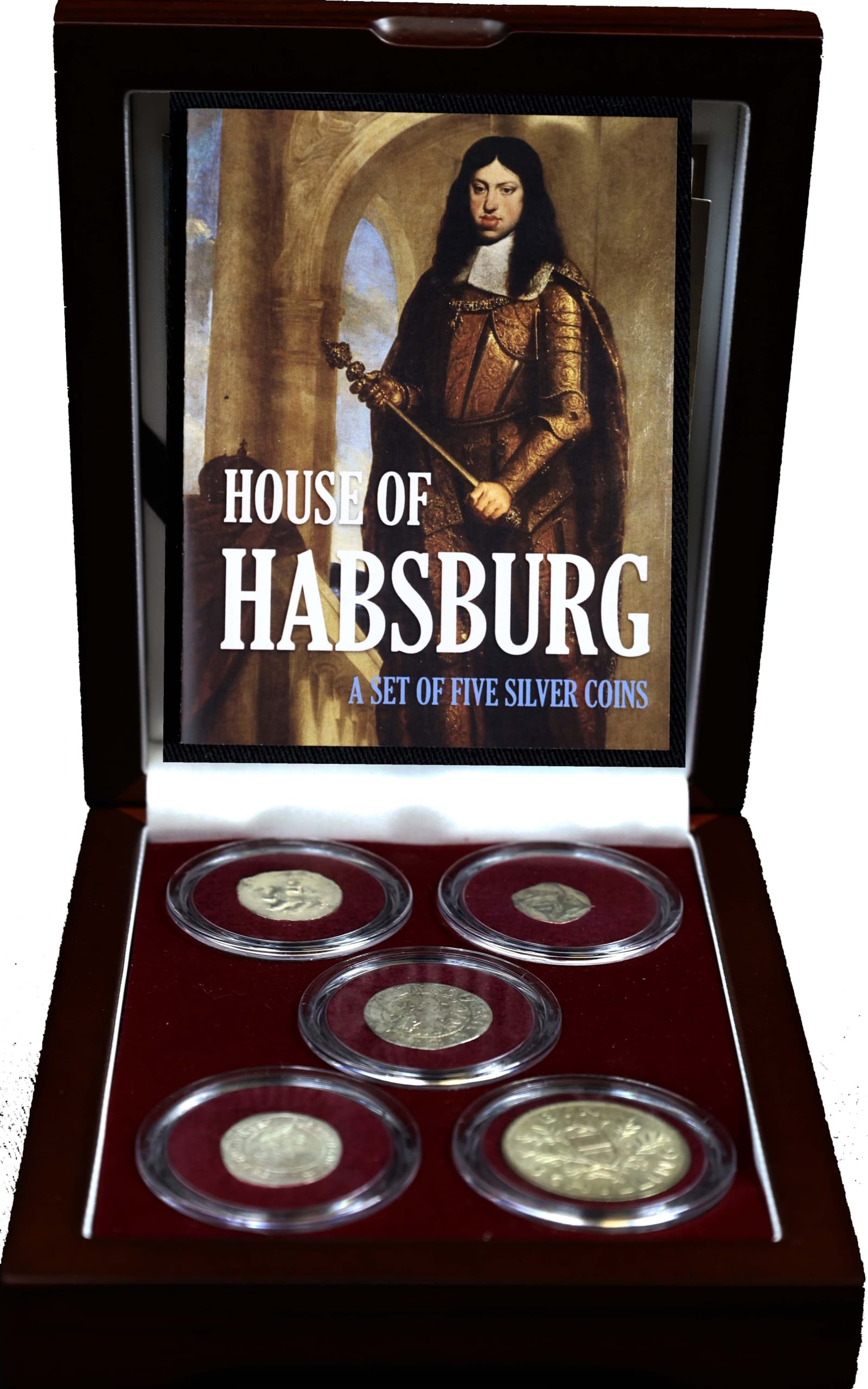
House of Habsburg: Five Coin Boxed Set(C)
Description
One of the most powerful dynasties in the history of Europe, the House of Habsburg ruled various cities, counties, duchies, principalities, kingdoms, and empires throughout Europe and the Americas from the High Middle Ages until the end of the First World War. Named for the fortress—Habichtsburg, or ”hawk castle“—built by Radbot of Klettgau, the founder of the dynasty, in 1025, the Habsburgs were in the thick of many crucial events in European history, including the Great Interregnum, the Thirty Years’ War, the War of Spanish Succession, the War of Austrian Succession, the Seven Years’ War, and the Napoleonic Wars, which ended with the Treaty of Vienna, the seat of Habsburg power. And it was the assassination of a Habsburg archduke that started the First World War.-Unlike other dynasties, the Habsburg consolidated power through marriage, not through war. As the famous adage has it, Bella gerant alii, tu felix Austria nube, or ”Let others wage wars: you, lucky Austria, marry.“ Indeed, so many Habsburgs married their cousins that numerous family members exhibited the chin deformity known as ”Habsburg jaw;“ in the case of Leopold II, the jaw was so enlarged that he is known as ”Hogmouth.“-The family motto, abbreviated AEIOU, was Austriae est imperare orbi universe, or, ”Austria is destined to rule the world.“ This did not come to pass. The last of the Habsburgs to sit on the throne, Charles, was forced out in 1919, at the end of the First World War; later attempts at restoration proved fruitless—although, as there are still Habsburgs alive and well in Austria, AEIOU is not beyond the realm of possibility.---1/ Albert I, Duke of Austria, King of Germany (1282-1308)-Silver pfennig, with incuse Habsburg lion.--2/ Frederick the Handsome, Duke of Austria, Anti-King of Germany (1308-30)-Silver pfennig, with three-part shield that is still the arms of Austria.--3/ Sigismund the Rich of Tyrol, Duke of Austria (1439-90)-Silver kreuzer, crowned Tyrolean eagle head.--4/ Leopold the Hogmouth, Holy Roman Emperor, King of Germany, King of Hungary, Croatia, and Bohemia (1665-1705)-Silver kreuzer, showing his Habsburg jaw--5/ Austria, First Republic (1925-26)-Silver schilling, with modern version of Frederick the Handsome’s shield.
Packaging: wood box.
Images are representative of the type and general grade. The date, mint, color, toning, and exact coins received may vary unless the listing explicitly says the actual lot is shown.